Vocation.
It's a word that comes from the Latin vocatio, and literally means "a summons" or "a calling." Talk to someone today about callings, and you'll probably hear questions like What's your passion? What kind of work fulfills you? What were you made to do? These days, we tend to think of vocation primarily as self-discovery, as finding that one thing that gives life purpose and meaning.
But the historic understanding of vocation is more complex than that. Martin Luther once wrote, "The purpose of every vocation is to love and serve our neighbors." Elsewhere, reflecting on the ordinary work of a dairy farmer, he remarked, "God Himself will milk the cows through him whose vocation that is."
I love how normal both of those thoughts are.
Recently, I snapped a photo of my daughter as she faithfully lived out her own vocation. Leading worship at church, camps, youth gatherings, and other events has become normal for her. But a couple of Sundays ago was different. For the first time, she led a congregation from a loft above the sanctuary to the rear of the church. It’s a practice that’s fairly common in many liturgical, traditional churches. Because of this, most people never saw her that morning, even though she led them all in worship. This struck me as profoundly important because visibility has become one of the great temptations of our age. We naturally want to be seen. We want our gifts to be recognized, applauded, and affirmed. If I'm honest, I pursue that temptation far more often than I'd care to admit.
But vocation has never been about being noticed. Instead, it's about how we become a gift for others.
One thought I've returned to repeatedly over the past year is that trees don't bear fruit for themselves; they bear fruit for others. Likewise, we don't live into our vocations or callings simply for our own fulfillment, but for the sake of those God has placed in our paths.
For some, that vocation is expressed through music. For others, it takes the shape of caregiving, teaching, creating, farming, writing, repairing cars, fixing leaky faucets, or simply being a faithful friend. Mothers and fathers have a vocation toward their children, just as spouses have a vocation toward one another. Some vocations are highly visible, while many are almost entirely hidden. Every one of them matters because each one becomes an opportunity to partner with our Creator as He continues to love the world through ordinary people.
How cool is that?
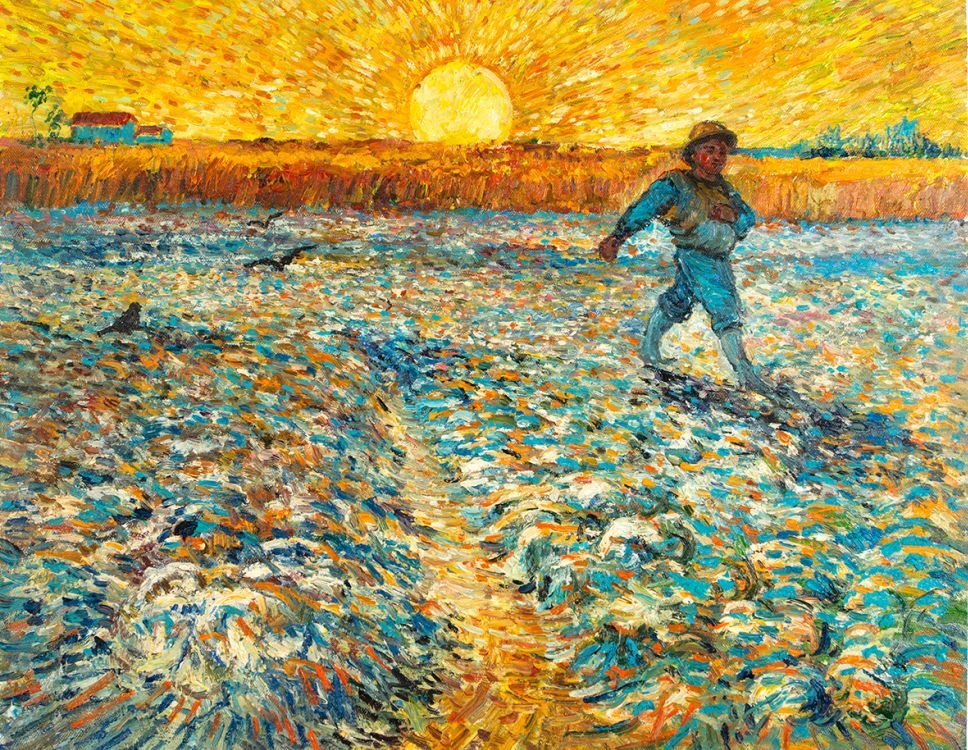
A recent conversation with my wife reminded me how differently previous generations and cultures often understand this. She spoke about her aunts and uncles who farmed for decades in the Philippines. Each day, they woke before sunrise, tended the land, fed their families, and provided food for their communities. Every night, when they lay their heads down to rest, they knew who they were and their place in society. Farming wasn't simply a career. It was a meaningful way to participate in the life of their neighbors and community.
Today, life is much different in the Philippines. Farmers and rural inhabitants face economic realities that have stripped them of their own sense of vocation. Many farmers have been forced off their land. Parents feel compelled to steer their children abroad, toward whatever profession offers the highest salary, so long as it's in another country. It’s not that these decisions are selfishly motivated. It’s impossible to make that claim in a nation where most people live day by day, not knowing where their next meal will come from. But you’d be hard-pressed to find a person who says that part of their identity and connection to the community has not been lost along the way, as an other-focused sense of calling has been abandoned for something else entirely.
Often, when I discuss the concept of vocation with others, I get asked the same question:
"Is what I do a true vocation, or am I simply doing what comes naturally to me or what I've become familiar with?"
It's an honest question, and one I think many of us ask ourselves. As I've reflected on it, I wonder if we've complicated the meaning of vocation more than our spiritual ancestors ever did. We're fortunate to live in a nation where many of us have choices. We can change careers, pursue new opportunities, reinvent ourselves several times over. That's an incredible privilege, and one that shouldn't be taken for granted. But perhaps we've also come to believe that vocation is primarily about discovering that one perfect occupation that finally fulfills us. Historically, Christians thought differently. For them, the means have always been flexible: Teacher. Farmer. Taxi driver. Mechanic. Artist. Engineer. Stay-at-home parent. Retiree. Neighbor.
The deeper question was never, "What do I do?" but "How is my life becoming a gift for others?" When the purpose of vocation is loving our neighbor, the specific role matters less than the posture we bring to it.
At NeighborLink, we are immersed in this reality every day. One person knows how to build wheelchair ramps. Another enjoys mowing lawns. Someone else loves organizing volunteers, preparing meals, making phone calls, praying with homeowners, or writing encouraging notes. None of these roles exists for the person performing them. Each one becomes a way God cares for His people through the gifts He's entrusted to someone else.
That's neighboring. Ordinary. Often unnoticed. And yet it may be one of the most sacred things we ever do in life.
So perhaps the question isn't whether we've found the “perfect calling.” Perhaps it's whether we're faithfully loving the people God has already placed in front of us. Because in the end, Luther was right:
God still milks cows.
He also builds ramps, visits lonely neighbors, repairs broken cars, teaches children how to read, bags groceries, prepares meals, writes songs, and comforts the hurting. He simply chooses to do these things through people who have discovered that vocation has never been about themselves.
It's always been about their neighbor.
*
Robert Johnson
Director of Formation, NeighborLink Foundation Inc
Robert is the Director of Formation at NeighborLink. Before stepping into this role, he served for six years on staff with NeighborLink Fort Wayne, most recently as Director of Communications and Development. Robert enjoys telling stories about neighbors and the transformational impact of neighboring. Outside of work, he loves traveling with his family, reading, and pursuing a life shaped by the Gospel.