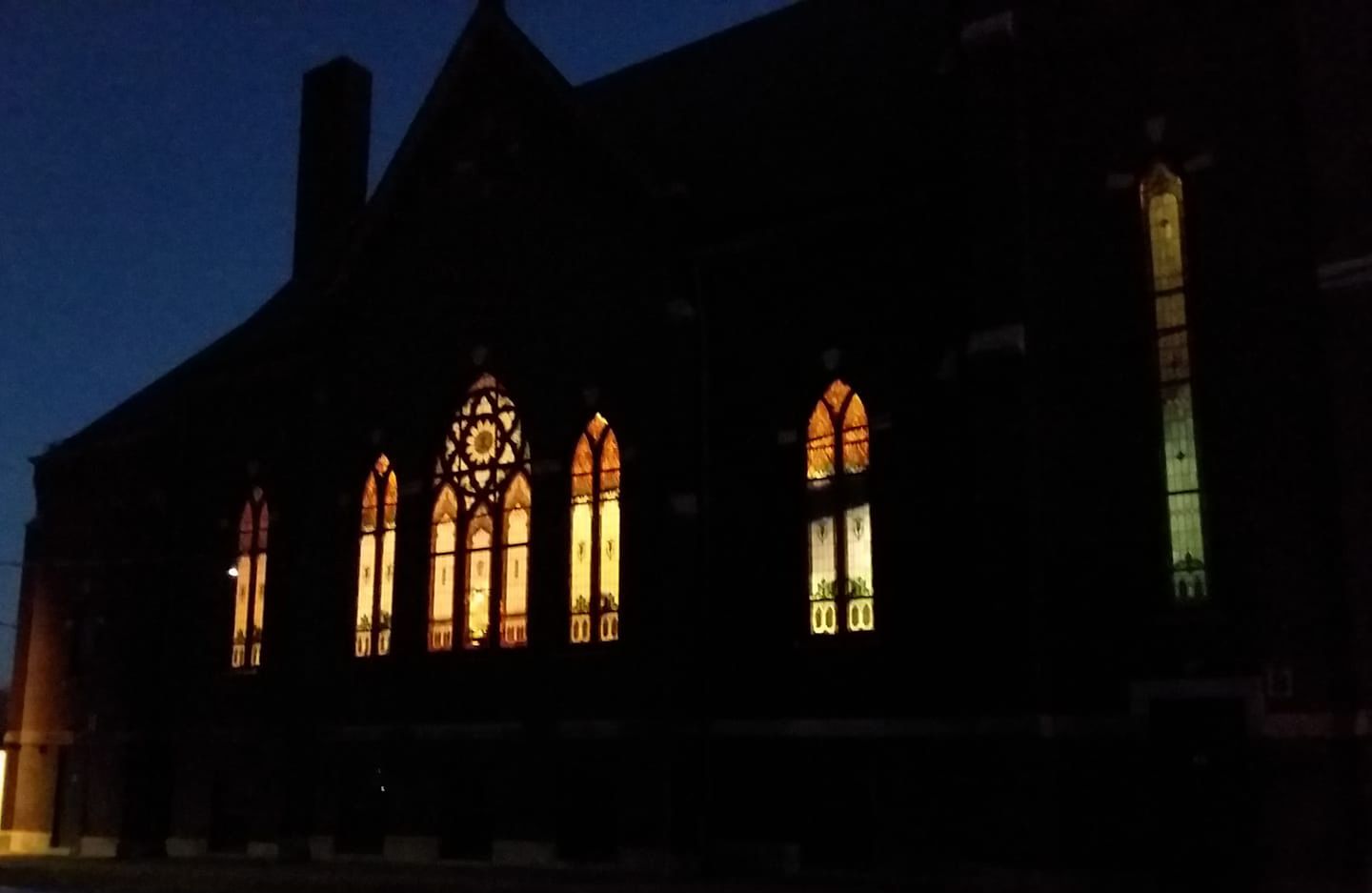
This morning, I felt compelled to read the early chapters of Revelation. I wasn’t thinking about dragons, beasts, or the endless debates surrounding timelines and prophecy charts. Instead, my focus turned toward the letters written to the seven churches in the early pages of the book. To the real people and places clearly loved by the Beloved.
What stuck out to me was how deeply contextual each letter is. Christ, through John, speaks directly into the lived realities of each community. Fear, compromise, endurance, pride, suffering, comfort, and faithfulness are all addressed. Nothing is hidden. One of the most encouraging phrases repeated throughout these chapters is only two words long: “I know.” Christ sees their work and hardship. He sees where they dwell. For churches struggling to survive under pressure, this had to be life-giving. They were not forgotten. They never were.
But those same two words are unsettling as well. Christ not only sees their faithfulness, but also their drift. He sees when love grows cold, when witness turns hollow, and when comfort slowly replaces compassion. The church in Laodicea is the clearest example of this. Wealthy, comfortable, and self-sufficient, they had become spiritually numb. In a frequently misrepresented visualization, Christ stands outside the door of their church and knocks. The image is haunting. It reveals the frightening possibility that a church can become so consumed with itself that it no longer recognizes the voice of Jesus at the door.
And yet, the imagery refuses to end right there. In the very next chapter – just a mere 3 verses later – John provides an unexpected vision of hope: “After this I looked, and there before me was a door standing open in heaven.”
How true to His nature this open doorway is.
*
All of this got me thinking. What would Christ say to the American Church today? I’m not interested in what our political tribes or social media feeds would tell us. What about Christ Himself?
I suspect His words would not fit neatly into predefined categories. I think He would first commend the meekness we seldom ever notice: the small congregation faithfully serving meals every week, the pastor helping repair a single mother’s car, the elderly woman praying daily for her neighborhood, or the churches quietly opening their buildings to people with nowhere else to go. Revelation reminds us that Christ notices things the world overlooks. He walks among the lampstands. He sees perseverance. He mourns suffering. He finds joy in ordinary faithfulness.
At the same time, I wonder if He would ask us difficult questions about our neighbors and the doors we repeatedly keep closed. If the Gospel is truly good news, who is it good news for? The New Testament consistently affirms it is good news for the lonely, the struggling, the overlooked, and the exhausted. And so, it must also be good news for the widow whose home is falling apart, the family trying to choose between groceries and rent, the single parent overwhelmed by isolation, and the neighbor too ashamed to ask for help. One of the dangers facing the American Church today is that we have become very good at talking about people without actually seeing them. We debate culture while remaining strangers to our neighborhoods. We speak about mission while insulating ourselves from the pain right outside our doors. Where’s the good news in that?
Meanwhile, desperate hands reach out to us every day. This is often done in quiet ways, for the deepest needs rarely arrive dramatically. Sometimes it looks like overgrown grass or a leaking faucet. Sometimes it looks like a broken-down car, a lightbulb out of reach, or a neighbor desperately hoping someone notices they are struggling. These moments matter because people matter. And in Revelation, being seen matters deeply. The throne at the center of the universe is not occupied by an indifferent deity. At the center of that throne stands a Lamb who was slain.
But what does that have to do with anything?
Michael Gorman describes this scene as “nonviolent and non-coercive Lamb power.” This vision challenges many of the assumptions that shape modern American life, including the assumptions that often shape Church life. The Lamb conquers not through domination, force, or flashiness, but through sacrificial love and faithful witness. If the Church is called to follow the Lamb, then surely part of discipleship means learning to notice people again. Not as projects or statistics, but as neighbors bearing real burdens.
At NeighborLink, we often talk about neighboring as a way of life. Not because small acts of kindness save the world, but because love becomes believable when it takes tangible steps. A weatherproofed wheelchair ramp will not mend political differences, but it may help someone experience dignity. A delivered meal will not solve a family’s brokenness, but it can remind them they are not invisible. Sitting on a porch and listening to a neighbor’s story may not erase years of marginalization, but for a moment, that person is seen, heard, and valued.
Perhaps this is part of what Revelation still calls the Church toward today. The Church is healthiest when it looks most like the Lamb: present, faithful, hospitable, patient, and willing to move toward suffering rather than away from it. In a world shaped by fear, self-protection, and the pursuit of influence, the Church bears witness to Christ when it opens its doors to neighbors who cannot repay anything in return.
Maybe that is part of what Christ would say to the American Church today: open the door before your heart grows too comfortable to hear Me knocking. Christ still calls His people into communion with Himself and with their neighbors. Perhaps one of the clearest ways the Church can reflect the Lamb is by becoming the kind of people who leave our doors open, too.
*
Robert Johnson
Director of Formation, NeighborLink Foundation Inc
Robert is the Director of Formation at NeighborLink. Before stepping into this role, he served for six years on staff with NeighborLink Fort Wayne, most recently as Director of Communications and Development. Robert enjoys telling stories about neighbors and the transformational impact of neighboring. Outside of work, he loves traveling with his family, reading, and pursuing a life shaped by the Gospel.